As is the case in all Children in the Wilderness’ (CITW) regions, school-based activities follow the school calendar. Both primary and secondary schools start their academic year in September, and end in July, with the last school term running from April to July.
We celebrated the closure of school-based activities during July as documented in this report, in which we are also taking the opportunity to celebrate our generous sponsors of the programme and children’s scholarships.
The end of the academic year does not necessarily mean the end of CITW activities, as affiliated primary school teachers and some local Eco-Mentors usually plan school holiday events, which the CITW Eco-Club and YES (Youth Environmental Stewardship) Club members participate in, until the schools open again.
Group discussions facilitated by Eco-Club teachers and local Eco-Mentors. “What are the activities that we are going to be doing between now and September? How are we going to be conducting those activities?”
Out of the meetings across the three zones, the most popular activities lined up for the school holidays (July to September) are the tree nursery and waste stationery paper recycling activities. CITW Malawi has three centres where main tree nursery education and practices take place. Two are purely CITW centres, and the third is facilitated by Root to Fruit, a partner organisation that specialises in reforestation programmes. In all these centres, CITW children will be participating in learning about and the actual raising of tree seedlings; caring for the seedlings; and then finally, between December and January, they will participate in the distribution of the seedlings within their communities.
This is usually one of the most fulfilling aspects to CITW that the children experience – participating in an activity that benefits their own people. From our CITW perspective, the programme is a manifestation of leadership development in the children and youth.
Symon Chibaka, CITW Malawi
For the waste stationery paper recycling project, the children will recycle the paper into fire briquettes. The Eco-Club members continuously collect waste paper from their school surroundings, keeping them for recycling. The briquettes are then given to the children for their parents to use at home for cooking.
“Intact Forests for Intact Life on Earth” – CITW Eco-Club motto for reforestation
Tree nurserySuccessful sapling propagationCelebrating reforestation with the community
For CITW, the reforestation projects, and the participation of Eco-Club members, are key to our leadership development approach. The children deciding to participate, and ultimately producing thousands of seedlings of many species to distribute to their communities, opens the eyes of the local people to their children and youth being capable of improving their communities’ environments, which naturally generates pride in their children; meanwhile, the trees benefit the local people and their communities in numerous ways too. The entire process is a huge win for our CITW programme and the children.
During the joint meetings, the schools received over 50,000 seeds, polyethylene tubes and other contributions for the 2025/26 planting season.
CITW youth representative Aubert Thipa (left) hands over seeds to a Head Teacher During some of the sessions, youth met Eco-Club members, and cheering and celebrations ensued
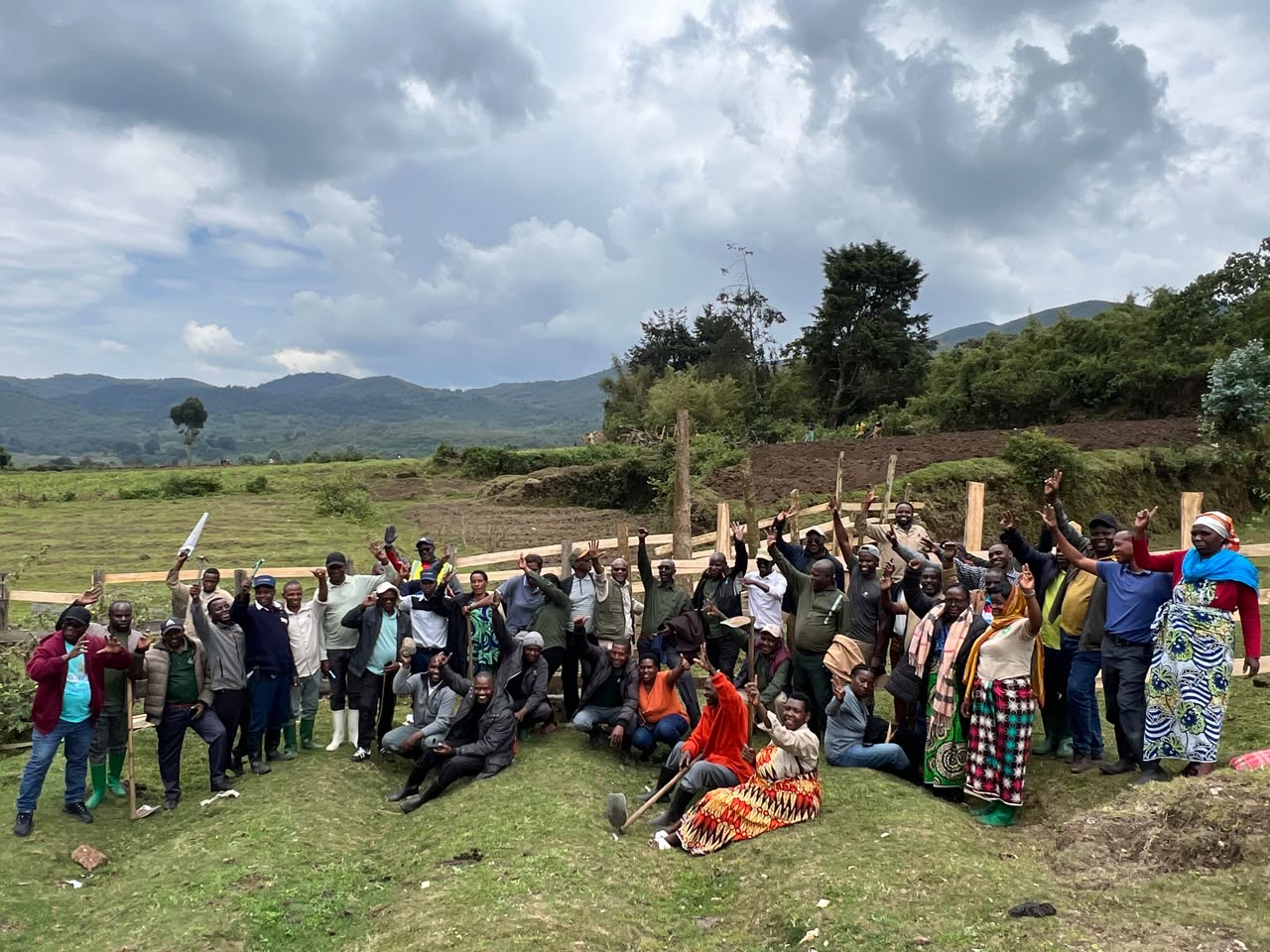
The Liwonde National Park Western Zone event took place on 19 July. Five Eco-Clubs came together; they played games and discussed a number of issues, and firmed up plans for activities lined up until September 2025.
Liwonde National Park Western Zone meeting
CITW’s Eastern Zone at Liwonde National Park held their joint meeting on 22 July. After all the celebrations of the day, they had some serious discussions about how they were going to conduct the reforestation and tree nursery programme activities during the school holidays. They also made plans for other major activities in the next school year, which starts in September 2025.
Liwonde Eastern Zone meeting
CITW YES youth also worked on their action plans. These included advanced paper recycling, and participating in monitoring planted trees with the help of Root to Fruit. The youth are currently working on getting a briquette-making machine that will help them produce more briquettes, of higher quality, which they think they could be selling at a fair price, as a fundraising effort. This was of tremendous interest, and CITW confirmed its support for the initiative.
CITW YES (Youth Environmental Stewardship)
“Growing Together with my Forest” – CITW YES Club motto for reforestation
Our supporters:
CITW Malawi’s success is made possible with support from those who understand the programme and share our passion for the children of Malawi. Currently the programme is running with support from the following partners from Hong Kong:
Left to right: Robert Footman, Dr Yu Wai Cho, Henry Tai
The three have raised over USD50, 000 which they have donated towards CITW’s operational programme, covering 17 months. Robert, Wai and Tai, are also sponsoring 10 deserving CITW students for four years, for the full duration of their secondary school education for the 2024/25 school year; they have subsequently also committed to this sponsorship for the 2025/26 school year too, bringing the number of sponsored students to 20. CITW highly appreciates this generous support and the partnership – as do the families and communities of the sponsored students, who now have a reason to hope for a better life for their children.
Musa Tewesa, Trust Chabwera, Gift Lumase, Odetta Henry and Hawa Mwamadi are five of the 10 new students sponsored by Robert, Wai and Tai. They attend New Era Boys and Girls Secondary School, one of the top-performing and biggest private secondary schools in Malawi. The performance and positions of the five students range from first in his class, held by Musa Tewesa, to tenth, held by Hawa Mwamadi – this in a class of over one hundred students. They have three more years of schooling before they are eligible to apply for university education.
Robert, Wai and Tai have also done an excellent job renovating old school classrooms and building additional school classrooms, teachers’ houses and rainwater harvesting facilities at Kafulafula Primary School, situated 4 km from the western boundary of Liwonde National Park. Kafulafula is one of our CITW-affiliated schools.
The Rosemary Pencil Foundation
Gillian Rose, the Founder and President of the Rosemary Pencil Foundation in the USA has been a CITW supporter since 2006. Currently, on average, she donates over USD20,000 every year, of which 95% goes towards scholarships for secondary school and college education. The remaining 5% goes towards the running costs of the CITW Malawi programme. She also supports one hundred deserving students every year (one hundred as a total of ongoing, plus the newly listed students every year).
Gillian has supported over 350 needy students with scholarships since 2006, with many of the beneficiaries going on to graduate from university and college. They now work in various professions, and have helped their families and communities develop a greater understanding of and appreciation for the importance of wildlife conservation and ecotourism.
CITW Youth Conference 2025 – university and college graduates and now working CITW youth, most of them beneficiaries of Rosemary Pencil Foundation scholarships
Also on the supporters list, we currently have Doris and Karley Ng, and Chris and Lindsay Harris.
The difference we make: We develop leaders who can objectify the desired positive change.
Left – Davie Nkosi when he was a CITW Eco-Club member (completed primary school in 2013); Right – Davie Nkosi 12 years later
Davie Nkosi is a CITW YES Club and Malawi University graduate (one of 250 such youth who have come through the programme); he is now a Forestry Officer for the Government of Malawi’s Department of Forestry.
Report by Symon Chibaka, CITW Malawi Programme Co-ordinator – 25/07/2025