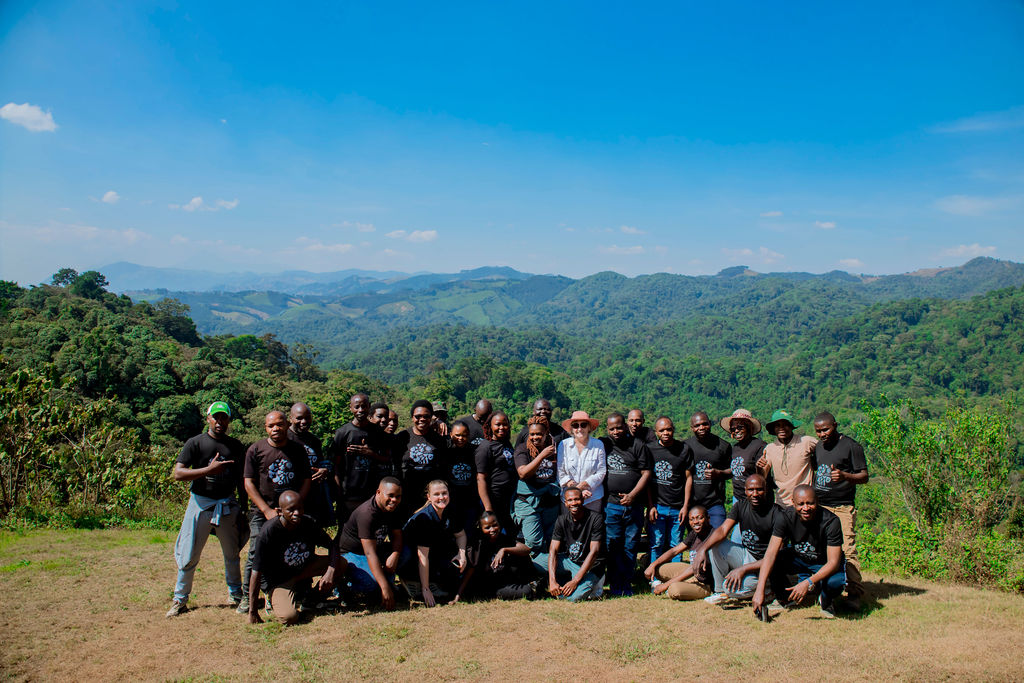
One hundred children from Rwanda’s Volcanoes National Park area recently attended two Conservation Camps based at the Ellen DeGeneres Campus of the Dian Fossey Gorilla Fund, as well as at Wilderness Bisate.

Children in Wilderness Rwanda, in partnership with the Dian Fossey Gorilla Fund (DFGF), Muhisimbi Voice of Youth in Conservation, and Conservation Heritage – Turambe (CHT), organised the Conservation Camps, which comprised workshops and fun activities, and ran from 4 – 7 August, and 11 – 14 August.


This year, we hosted 50 P5 (Grade 5) children on each camp, meaning that 100 children attended the 2025 Conservation Camp – up from 80 in previous years, except for the first camp in 2019 when we hosted only 40 children! The children were selected from 10 schools across the districts of Musanze, Burera, and Nyabihu bordering the national park, and together with their teachers, were collected by bus from their respective schools and transferred daily to the Ellen DeGeneres Campus of the Dian Fossey Gorilla Fund.


All the children were selected because they are members of the Environmental Clubs at their schools, and are amongst the most motivated students in their clubs, as well as the best performers at their schools.


Wilderness Rwanda Operations Manager Heinrich Röntgen (in the white shirt, above left) officially opened this 2025 camp, welcoming the children and wishing them a great time with the team that organised the camps. He encouraged the children to appreciate, and understand, the importance of environmental conservation, so that they are can spread their learnings from the Conservation Camp. “Once you understand what you have learned in this camp, you will become good ambassadors everywhere, but especially at school and in your villages”, he said.


The workshops kicked off with energiser games and lessons – such as the web of life and the food chain, and how ecosystems function in an interconnected way, with each element relying on the others to survive. They also had lessons on gorilla behaviour and ecology, the national parks of Rwanda, threats to biodiversity in VNP as well as the other parks, and the actions necessary to help protect the parks, plus the importance of birds in ecosystems.
There was also time for arts & crafts, many different games and songs, snacks and meals, a nature walk at Wilderness Bisate and exploring the environment.


The Rwanda Development Board’s (RDB) Community Conservation Warden of Volcanoes National Park (VNP) and Gorilla Doctors were invited to the workshops, plus the children enjoyed a tour of the conservation gallery at DFGF to see the installations, and learn more about the history of Dian Fossey, her habituation of the mountain gorillas, and some of the gorillas she made famous.


On the Thursday, the last day of each the camp, we took the children to Wilderness Bisate to see the lodge’s indigenous tree nursery. This was followed by a hike on one of the nature trails on the property. In the nursery, the children were welcomed by the Bisate agronomists, who explained their processes, from seed to sapling to tree, as well as the importance of biodiversity in trees, and how to look after a sapling. The children were very interested and asked many, many questions. Whilst hiking on the nature trail, the different trees were identified and more questions followed. The visit to Wilderness Bisate ended with each child choosing their own indigenous sapling to plant at their home.

From Bisate, the children took part in a conservation parade back to the Ellen DeGeneres Campus. They were accompanied by a police escort – to make sure that everybody was safe walking on the road – as well as an ambulance and medics. The 50 children marched through the community singing songs which carried their conservation message.

Once back at the Ellen DeGeneres Campus they had lunch and then we welcomed the visitors who had been invited to the official camp closures. These included sector leaders, Prosper Uwingeri, Chief Park Warden of Volcanoes National Park (above, handing over the children’s gift bags), Felix Ndagijimana, Country Director of the DFGF Rwanda, Manzi Kayihura, Wilderness Rwanda Executive Chairman, together with Wilderness staff, the headmasters of the 10 schools, other conservation stakeholders, and journalists from the local newspapers and television stations. We were thrilled that the Conservation Camps received a lot of media attention across Rwanda, including national TV, radio broadcasts and newspaper articles.

We also invited children who had attended the 2024 Conservation Camp and received a sapling on their camp to come and share their experience with their peers. One of these children was Deben Umukunzi from Rushubi Primary School. For his opener, he warmed up the room with a song (above)! He is passionate about environmental activism, and was naturally very happy to be selected to tell his story.

“I have taken care of the tree that I received at the camp last year. I planted it at home, and at first it was not easy to maintain – it needed to be planted in a good location, with daily monitoring including watering, protecting it from domestic livestock, and staying committed to its growth. But my tree has grown, and it’s taller than me now!” he said.
He encouraged the children to plant the trees they received from Wilderness Bisate. “They are your babies, and I ask you to take care of them as much as possible, so that together we can put our lessons into practice and the trees will grow and become bigger and bigger! That will be our contribution to the environment and conservation”, added Deben.
One of our partners, Emmanuel Harerimana, Director of the Muhisimbi Voice of Youth in Conservation, explained the main objective of the camp: “Our goal is to prepare the youth to become tomorrow’s leaders in conservation. According to the monitoring and evaluation data we have collected, the students receive their lessons positively, which shows the programme is delivering the results we expected, and also the impact of the camps is clearly showing in some of the statements that the students shared on their last day of camp”.
“We are proud to see this initiative expanding from 80 children to 100 children, and from one District to three Districts. We’ve also grown from eight schools to 10 schools, with the target being to spread the message very far, for many children live around the park and this number will continue increasing, along with the strength of the lessons we provide”, he noted.
He concluded by saying that the first Conservation Camp in Rwanda took place in 2019 and since that time, including this year’s two camps, we have hosted a total of 380 students, which is amazing and empowering.
The children promised the visitors that they will continue to contribute to conservation and make a difference in their homes and villages.
Manzi Kayihura (below) noted that community and conservation are an integral part of the Wilderness vision and mission, and also said that being in tourism is understanding that nature is the base of all our experiences. “We are educating children and raising awareness about the environment, not only by teaching the children but also through the Scholarship programme. Furthermore, the camps are not just about empowering individual children, but they also provide them with the potential to create sustainable change within their communities. We are fostering the growth of a future leader, innovator or educator”.

He concluded by thanking all of the people who were involved in the camp preparations, as well as the donors whose support ensured that the Conservation Camps took place.
“We are looking forward to running the camps again next year!” said Manzi.