Wilderness Zambezi Assistant Impact Manager Cynthia Ndiweni reports on the multiple empowerment benefits of Children in the Wilderness Zambezi’s Reusable Sanitary Pad Project in the Hwange District.
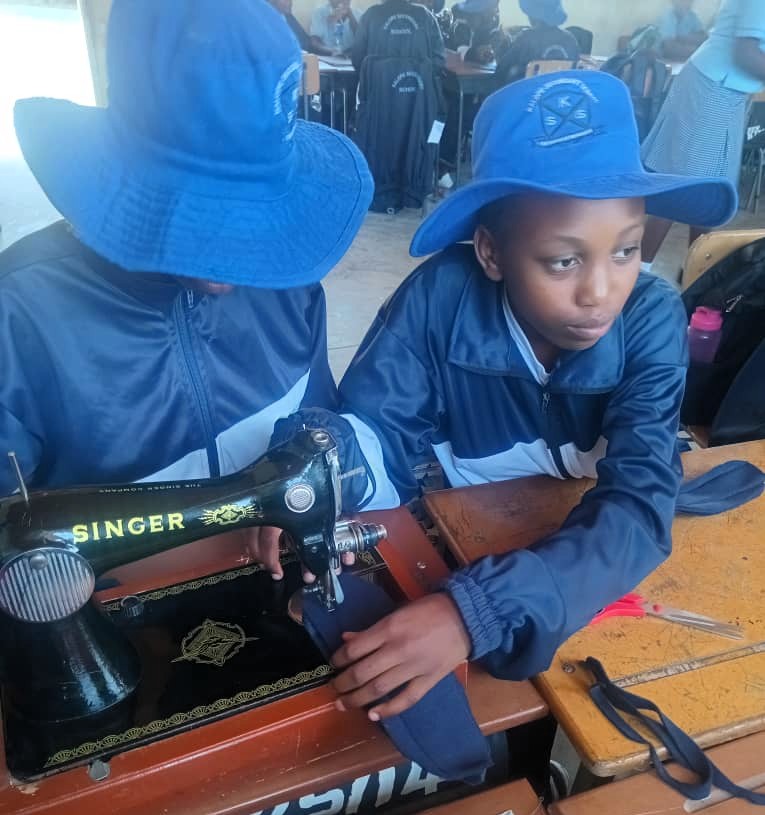
This Reusable Sanitary Pad Project is a Children in the Wilderness Zambezi (CITW) initiative, supported by the Rotary Club of Victoria Falls. The main goal of the project is to help school-going girls access sanitary products while also teaching them useful sewing skills. To support this initiative, sewing machines, materials, and lessons were provided to two schools – Lukosi and Kalope secondary schools – with Ms Manene, the Textile teacher, playing an important role in guiding and supporting the activities at both sites.
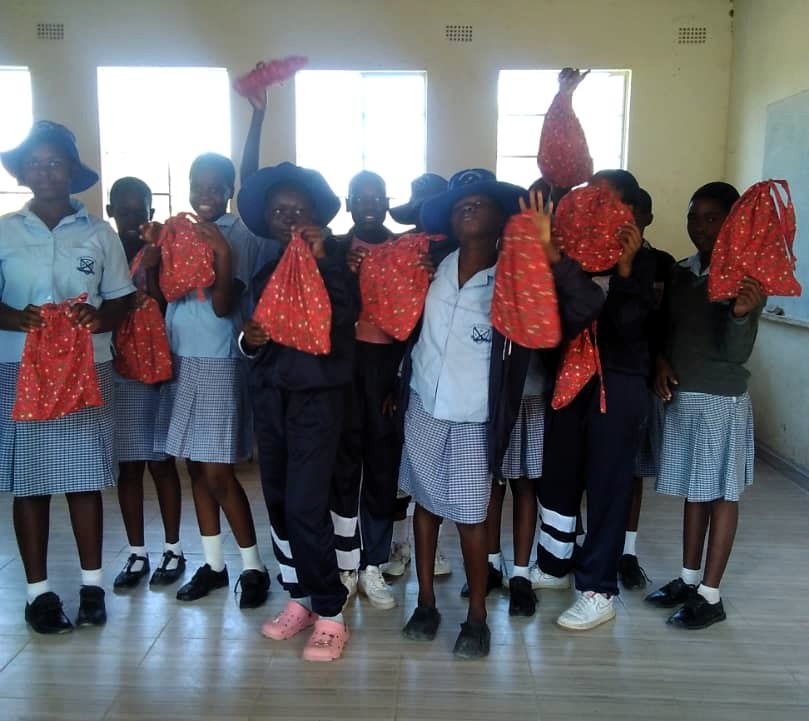
So far, a total of 456 reusable sanitary pad packs (2,736 pads) have been produced at the two schools, and achievement that rightly reflects the dedication and hard work of the students and their facilitator in the sewing clubs.
All 456 packs have now been distributed successfully to beneficiaries in three selected schools. In total, four distribution exercises were been carried out between May 2025 and March 2026 at reaching Lukosi and Kalope Secondary Schools, and St Mary’s Primary School.
Impact of the Project
a) Improved Access to Sanitary Wear
The project has directly supported 456 girls, each of whom received a reusable sanitary pack at no cost. This has greatly improved access to safe and dependable menstrual products. Previously, many girls faced difficulties managing their menstrual cycles, which often affected their comfort and confidence. With access to these reusable pads, girls are now better able to attend school regularly and participate fully in their daily learning activities without disruption.
b) Skills Development and Empowerment
In addition to providing sanitary products, the project has made a strong contribution to skills development. Students involved in the sewing clubs have been trained to produce reusable sanitary pads, giving them valuable hands-on experience.

Through this process, they have developed practical skills such as basic sewing techniques, the proper use and maintenance of sewing machines, fabric cutting and assembly, as well as quality control and finishing. These skills are not only useful for the success of the current project, but now also equip the learners with abilities they can use in the future for income-generating activities or personal growth.
The programme has also provided learners with consistent practice, helping them improve their confidence and competence in sewing. This is particularly beneficial as their school curriculum includes practical subjects such as Fashion and Fabrics. With increased exposure and practice, students are better prepared to perform well academically in these subjects.
c) Knowledge on Menstrual Health and Hygiene
The project also promotes awareness and education on menstrual health and hygiene. During each distribution exercise, beneficiaries receive guidance on menstrual care. Ms Manene continues to provide follow-up lessons and ongoing support after distributions.
These sessions include practical guidance on how to properly use, wash, and care for the reusable sanitary pads. In addition, the discussions help build confidence among the girls and encourage healthy hygiene practices. The sessions also emphasise that menstruation is a natural process and should not be associated with shame or discomfort.
The girls are encouraged to speak openly, ask questions, and learn in a safe and supportive environment. This open dialogue helps them better understand their bodies and dispels common myths. Furthermore, many of the topics covered align with what students learn in biology or science classes, allowing them to understand these concepts more clearly in a relaxed and engaging setting.
The project’s production process relies heavily on student participation, which means progress can sometimes be affected by their academic and extracurricular commitments. During Term 1, in particular, many students are involved in sports activities, which reduces their availability for sewing sessions. At Kalope Secondary School, another challenge is the lack of electricity in the sewing room. As a result, learners depend on manual sewing machines, which are slower to use and require more physical effort. This limits the number of sanitary pads that can be produced within a given time. Production is also temporarily halted during examination periods, as students need to prioritise their studies. These factors combined slow down the overall pace of production.
Solutions Implemented
To address these challenges, CITW will be taking steps to involve the wider community in the project. For Term 2, there will be a strong focus on encouraging community members, especially parents and local volunteers, to participate in the sewing activities during school hours. However, maintaining consistent volunteer involvement has been difficult in the past, mainly due to the lack of financial incentives. Despite this, efforts are ongoing to motivate participation by offering opportunities for volunteers to learn additional sewing skills. These skills can be used to produce items for sale, creating potential income-generating opportunities.
By engaging the broader community, our aim is to improve sustainability, increase production capacity, and build a network of skilled individuals who can continue supporting menstrual health initiatives in the future.
Conclusion
The production of 456 sanitary packs and the successful distribution to three schools demonstrate the early success of the project. By combining access to sanitary products with skills training and health education, the initiative continues to positively impact the lives of girls in Hwange District. Although some challenges have slowed production, involving the wider community offers a strong opportunity for growth and long-term sustainability. With plans to involve more community members, the project is well-positioned for continued growth and long-term success.